If you have ever printed punch cards for your business and watched most of them disappear into the back of wallets never to return, you already understand the core problem with single-channel loyalty. The fix is an omnichannel loyalty program, and the difference in retention numbers is not subtle.
Companies with strong omnichannel customer engagement retain 89% of their customers, compared to 33% for businesses using weak or single-channel approaches. That is not a marginal improvement. That is a fundamentally different business.
And here is the part most guides skip: you do not need enterprise software, a mobile app, or an engineering team to build one. A QR code, an SMS sequence, and a clear reward structure is all it takes. The rest is discipline.
This guide covers what an omnichannel loyalty program actually is, why it outperforms everything else, how to build one without a six-month project, and what kills most programs before they ever get traction.
What Is an Omnichannel Loyalty Program?
An omnichannel loyalty program is a customer retention system that tracks and rewards customers consistently across every channel they use to interact with your business. In-store visit, phone booking, online appointment, QR code scan at reception: all of it feeds into one unified customer profile.
The keyword is unified. Most loyalty programs fail because they are built in silos. The in-store punch card does not know about the online booking. The email list does not sync with the POS. When channels do not communicate, customers fall through the cracks and the program quietly dies.
A proper omnichannel loyalty program eliminates that. Every interaction, regardless of where it happens, contributes to the same account. The customer always knows where they stand, rewards do not get lost, and you get a complete picture of your most valuable people.
It helps to read about omnichannel customer experience strategies as background, because loyalty programs are really the retention-focused application of the same principles: unify the experience, make it consistent everywhere, and eliminate friction at every touchpoint.
Omnichannel vs. Multichannel Loyalty: The Actual Difference
These two terms get used interchangeably and they should not be. The distinction matters.
A multichannel loyalty program means you run loyalty on multiple channels. You have a punch card in-store, a points tracker on your website, and maybe an email list. These all exist. What they do not do is talk to each other. A customer who scans your QR code in-store does not get credit on the app. A customer who books online does not automatically have their visit counted at reception. The channels are parallel, not connected.
An omnichannel loyalty program means all those channels feed into a single, shared customer profile. The customer earns credit for every visit regardless of how they checked in. The SMS confirmation they get references their real visit count. The reward they earn is the same whether they walked in, booked online, or were logged by a staff member.
The operational difference is data integration. The customer experience difference is: do they feel recognized everywhere, or only in the right place at the right time?
Why the Numbers Back Omnichannel Loyalty Programs Hard
Let me put some concrete data behind why this matters, because the gap between omnichannel and single-channel loyalty is not subtle at the business level.
A Harvard Business Review study of 46,000 shoppers found that 73% use multiple channels during their buying journey. If your loyalty program only captures one of those channels, you are invisible for most of the relationship.
Here is what that invisibility costs you:
- Purchase frequency: Omnichannel loyalty programs drive 250% higher purchase frequency compared to single-channel programs.
- Spend per visit: Omnichannel customers spend an average of 16% more per order than single-channel shoppers.
- Lifetime value: Omnichannel shoppers deliver 30% higher customer lifetime value compared to those engaging on just one channel.
- Revenue growth: Companies with strong omnichannel programs see 9.5% year-over-year revenue growth, versus 3.4% for weak omnichannel companies.
- Retention: 89% retention for strong omnichannel versus 33% for weak, as noted above. The math on that: retaining 89% of customers versus 33% while it costs 5 to 25 times more to acquire a new customer than to retain an existing one means the compounding ROI of omnichannel loyalty is genuinely enormous.
And the program-level ROI is just as compelling. Loyalty programs generated 5.2x more revenue than their costs in 2025, up from 4.8x the year before. Loyalty program members generate 12-18% more incremental revenue annually than non-members. These are not startup metrics or optimistic projections. These are averages across real programs.
The 4 Core Components of an Effective Omnichannel Loyalty Program
Before you build anything, get these four things right:
1. A unified customer profile
Every customer needs a single profile that captures their visit history, reward balance, and communication preferences, regardless of how they check in. Without this, you do not have an omnichannel program. You have separate programs with different names. The unified profile is the whole point.
2. Multiple ways to check in
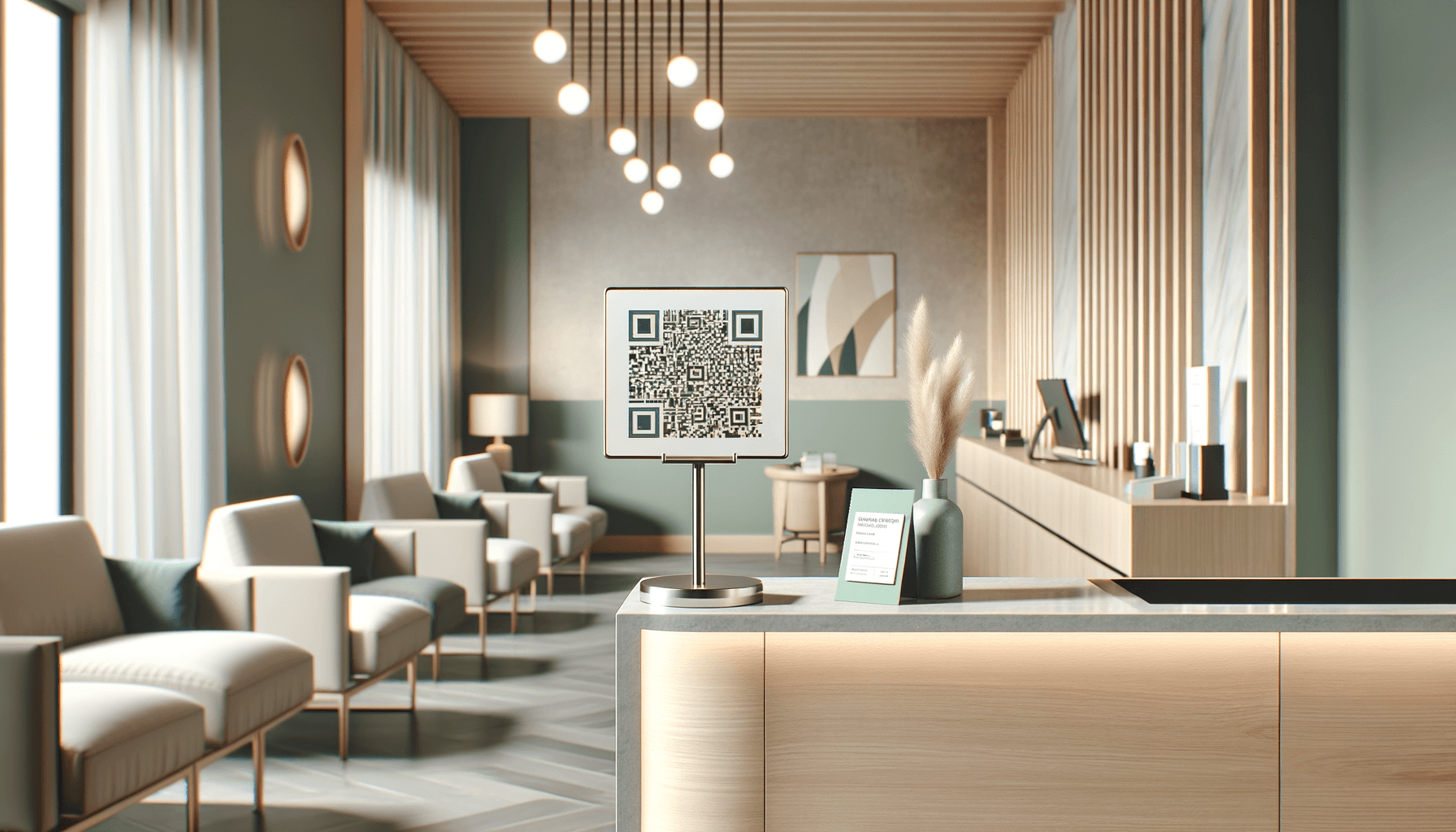
Customers should not have to jump through hoops to participate. The most frictionless approach for service businesses: a QR code at the front desk that logs the visit when scanned. No account creation, no download, no card to remember. Just scan and go. Back this up with staff manual entry for customers who do not scan, plus an API or Zapier integration if your booking software can fire a trigger when an appointment completes.
3. Automated SMS notifications
The loyalty program only works if customers know they are in it. Automated SMS messages do this better than any other channel. SMS open rates consistently exceed 90%, which is why a simple "You are 2 visits away from your reward!" message has an outsized impact on return visit rates. Email gets buried. Physical cards get lost. SMS gets read.
4. Reward milestones customers can actually reach
Members who redeem rewards spend 3.1x more annually than those who never redeem. Most programs set milestones so high that customers give up before they get there. Your first milestone should be achievable within 60 to 90 days for a typical customer. Five visits is the right starting point for most service businesses.
Visit-Based vs. Points-Based vs. Hybrid: What Works for Service Businesses
There are three main reward structures and they are not equally suited for every business.
Visit-based loyalty is the simplest and most transparent. Every visit counts as one unit of progress. Customers understand it immediately because it maps to how they already think about coming back: they either visited or they did not. For salons, clinics, cafes, and any service business where a "visit" is the natural unit of interaction, this is the right starting point.
Points-based loyalty is more flexible but more complex. Customers earn points for spending, not just visiting, which lets you reward a $200 service differently from a $50 one. The downside: it is harder to communicate clearly. "You have 340 points" means nothing if the customer does not know how many they need for a reward. Points programs also tend to have higher breakage rates, meaning customers earn rewards they never claim, which sounds good for your margins but signals a program people are not engaged with.
Hybrid programs combine both: visit count determines progress toward a milestone, but reward value scales with cumulative spending. This works well when your services have a wide price range. A basic facial at $80 versus a treatment package at $600 probably deserve different reward weights. Build this after your visit-based foundation is running smoothly.
Real-World Omnichannel Loyalty Programs That Actually Work
Let me be concrete about what this looks like at scale and what it looks like for a local service business.
Starbucks Rewards is the clearest example of omnichannel loyalty done right. You can order ahead on the app, pay in-store with the card, or tap your phone at the register, and every interaction feeds the same Stars balance. Starbucks Rewards accounts for 53% of all U.S. Starbucks store sales. The program works because the channel never matters. The customer is always the same customer in the system.
Sephora Beauty Insider uses the same principle for beauty retail. In-store purchase, online order, app interaction: all tracked under one profile. Sephora Beauty Insider members account for 80% of total Sephora sales. Their most loyal customers are generating the vast majority of revenue, and the program is why.
Now for a local business version. A hair salon using a QR-first system sets up a printed code at the front desk. Every client who sits down either scans it themselves or gets logged by the receptionist. Two hours after leaving, they get an SMS: "Thanks for visiting Studio X! You now have 3 of 5 visits toward your free blow-dry." Three days later, if they were happy with their visit, they get a gentle Google review prompt. Twenty days later, a referral offer with their personal referral code. The owner does nothing after setup. The whole sequence runs automatically.
That is an omnichannel loyalty program. It is not as sophisticated as Starbucks. But it uses the same core mechanic: one unified record of the customer, triggered communications across channels, and rewards that give people a reason to come back.
SMS: The Most Underused Omnichannel Loyalty Channel
Here is something interesting: almost every competing guide on omnichannel loyalty programs focuses on apps, websites, POS integrations, and email. SMS barely gets a mention in most of them. And yet SMS is the highest-engagement channel available to most service businesses.
Think about what SMS can do in a loyalty context:
Visit confirmation. The moment a customer checks in via QR code, a text goes out immediately: "Welcome back, Sarah! You now have 4 of 5 visits toward your free massage." This instant confirmation reinforces the habit of scanning.
Progress reminders. An automated message one visit before the milestone: "You're 1 visit away from your reward at Studio X. Book your next appointment here." This drives the action that earns the reward.
Reward delivery. When the milestone hits, an SMS delivers the reward: "Congratulations! Your free service is waiting. Show this message at your next visit." No card to lose, no app to open.
The referral invite. At 20 days post-visit, a personalized referral link goes out: "Love your results? Share with a friend and you both get 15% off your next visit." The referral link is unique to the customer, so attribution is automatic.
Feedback and review requests. Two hours after any visit, a short SMS asks for feedback. Happy customers get a Google review prompt with a pre-drafted review ready to copy and post.
This is the full omnichannel loyalty sequence using SMS as the connective tissue. Automating the entire post-visit customer experience this way means every single visit becomes a growth event, not just a transaction.
SMS open rates consistently exceed 90%, compared to about 20% for email. If you are building an omnichannel loyalty program and ignoring SMS, you are building it on your weakest channel.
How to Build an Omnichannel Loyalty Program Without a Six-Month Project
Most guides make this sound like an enterprise software project. It does not have to be.
Step 1: Define your reward structure in one sentence
"Every 5 visits earns a free [service]." If you cannot state it in one sentence, it is too complicated. Complexity kills participation before it starts.
Step 2: Choose how customers will check in
For brick-and-mortar service businesses: a printed QR code at reception. No hardware, no app, works from any phone camera. Back it up with staff manual entry for customers who do not scan.
Step 3: Set up automated SMS notifications
Every check-in triggers at minimum two messages: a confirmation with current visit count ("Thanks for visiting! You now have 3 of 5 visits toward your free haircut.") and a reward notification when the milestone is hit. Add a one-visit-away reminder for extra motivation.
Step 4: Connect your booking software if you have one
If you use Mindbody, Jane App, Acuity, or similar, connect via API or Zapier so visits log automatically when appointments complete. Zero manual work once it is set up.
Step 5: Link loyalty to your feedback and review flow
Every check-in is also the trigger for your post-visit SMS sequence: feedback request, Google review prompt, and referral offer. Understanding the full customer journey and touchpoints helps you design this sequence so it feels natural, not intrusive.
Step 6: Define your measurement baseline before launch
Pull your current average visit frequency per customer and average spend per visit. These are your before numbers. You need them to prove the program is working six months from now.
The Trigger Methods That Get Customers to Actually Participate
The channel customers use to check in is the single biggest variable in participation rates. Get this wrong and even the best reward structure will not save you.
QR code check-in is the default for in-person service businesses. Print it, place it at reception, and every customer who walks through the door can participate without downloading anything. They scan, their visit logs, they get a confirmation SMS. The whole check-in takes under ten seconds.
Staff manual entry is your safety net for walk-ins, phone bookings, and customers who do not scan. This requires building a habit with your team, but it is essential. Not every customer will scan the QR code. Your staff needs a quick way to log those visits too, or you lose the data.
API and Zapier connections are ideal if you already use scheduling software. When an appointment is completed in your booking tool, the visit logs automatically. Zero manual work. This is how you build a program that runs without someone thinking about it.
HubSpot integration serves businesses that manage clients through a CRM. When a contact hits a specific stage or a deal closes, the loyalty check-in triggers automatically.
The Fatal Mistakes That Kill Most Omnichannel Loyalty Programs
Let me be honest about why most programs fail. It almost always comes down to one of five things:
Too much friction to participate. An app download requirement kills participation at the first step. Programs that make check-in invisible, where simply showing up is all the customer has to do, consistently outperform app-based programs for local service businesses.
Rewards that take too long to reach. If your first milestone is visit 10, customers who start at visit 1 feel like the reward is too far away to track. Set your first milestone at visit 5. Give them a win early. The habit forms because they feel progress.
No proactive communication between visits. Your loyalty program exists only in your software if customers do not hear about it between visits. Personalization is the top investment priority for 58% of businesses running loyalty programs, and the highest-ROI form of personalization for a local business is a simple "you are 2 visits away" SMS reminder. Without this, customers forget they are enrolled.
Channels that do not sync. A customer who books online should not need to check in separately when they arrive. Disconnected systems mean lost visits and customers who feel penalized for using the "wrong" channel.
Treating loyalty as separate from feedback and reviews. A loyalty visit is also your best moment to collect feedback and prompt a Google review. Running loyalty in isolation misses this entirely. Your customer feedback strategy and your loyalty program should connect at the check-in trigger, not run on parallel tracks.
How to Measure Whether Your Omnichannel Loyalty Program Is Actually Working
Most loyalty programs report participation numbers but nothing else. That is the wrong metric to optimize. Here is how to know if yours is actually driving business results:
Visit frequency for members vs. non-members. Pull these two numbers. If your loyalty members are visiting at the same rate as non-members, the program is not motivating repeat behavior. Target: members visiting 20 to 30% more frequently within their first 6 months.
Redemption rate. What percentage of earned rewards are actually claimed? A healthy redemption rate sits above 50%. Below 20% means your milestone is too high or the reward is not compelling enough.
Average spend per visit. Members should spend more per visit. Loyalty members typically spend 12 to 18% more annually than non-members. If this number is flat, consider adding a points layer for higher-value services.
Churn rate comparison. Are loyalty members churning less than non-members? This is the clearest long-term signal of whether the program is creating genuine loyalty or just tracking visits.
Improving customer retention by just 5% can increase profits by 25% to 95% according to Bain and Company research. A loyalty program that moves your retention rate from 40% to 45% is not a small win. And the global loyalty management market, valued at $15.19 billion in 2025, is projected to reach $41.21 billion by 2032, which tells you that the businesses investing seriously in this are not slowing down. The competitive advantage of a well-run omnichannel loyalty program compounds over time because the data you collect about your best customers gets richer with every visit.
Connecting Loyalty to Your Broader Growth System
Here is the angle most omnichannel loyalty guides completely miss: your loyalty program is also your most reliable pipeline for customer feedback collection and Google review generation.
Every loyalty check-in is a visit you know about in real time. That means you can trigger a follow-up SMS two hours later requesting feedback. Customers who had a positive experience get an easy path to share it on Google, with an AI-drafted review ready to copy and post. Customers who had a less-than-great experience get a direct line back to you before they post anywhere public.
This is personalized customer experience at its most practical. The customer is not getting a generic email blast. They are getting a message that references their specific visit, their name, and their history with your business. That specificity is why these messages work when batch email campaigns do not.
Spokk handles this entire workflow from one trigger: QR check-in logs the visit, the automation sequence sends the loyalty confirmation SMS with current visit count, then two hours later sends a feedback request, then three days later a Google review reminder, then twenty days out a referral offer with the customer's unique referral code. One check-in, the entire growth loop runs automatically.
The loyalty program is not a standalone feature. It is the entry point to a system that compounds: more visits generate more feedback, better feedback improves your service, more Google reviews improve your local SEO, and more referrals bring in customers who already trust you because someone they know sent them. That is the full picture of what an omnichannel loyalty program can be when it is connected to everything else.
